
Circle’s third-quarter 2026 results show a growing cross-border payment network, but not yet a clear measure of what that activity earns. As reported on November 17, 2026, Circle Payments Network (CPN) had reached $41.3 billion in annualized payment volume at quarter-end, up from $14.7 billion in Q2 and $8.3 billion in Q1. The Q3 figure annualizes roughly $3.4 billion processed in the final 30 days of the quarter; it is not a full year of completed payments.
CPN connects financial institutions to settle cross-border payments using stablecoins. At a hypothetical fee of five basis points, or 0.05%, a full year at the Q3 exit rate would produce about $20.65 million in revenue. That is a calculation, not disclosed CPN revenue. Circle reports transaction revenue for the group, which also includes redemption fees, blockchain rewards and digital-asset transaction infrastructure such as CCTP. The results do not show how many CPN payments incurred a fee or how much Circle collected from them.
The proposed Tazapay acquisition
Circle proposed paying approximately $400 million in shares, subject to closing adjustments, for the Tazapay stake it did not already own. Tazapay was already a CPN design partner. It reports more than $25 billion in annualized payment volume, about 60% of it involving stablecoins, and has customers and a network for paying funds into local accounts. Those capabilities could bring Circle closer to the receiving end of a cross-border payment, but the acquisition had not closed at the time of the report.
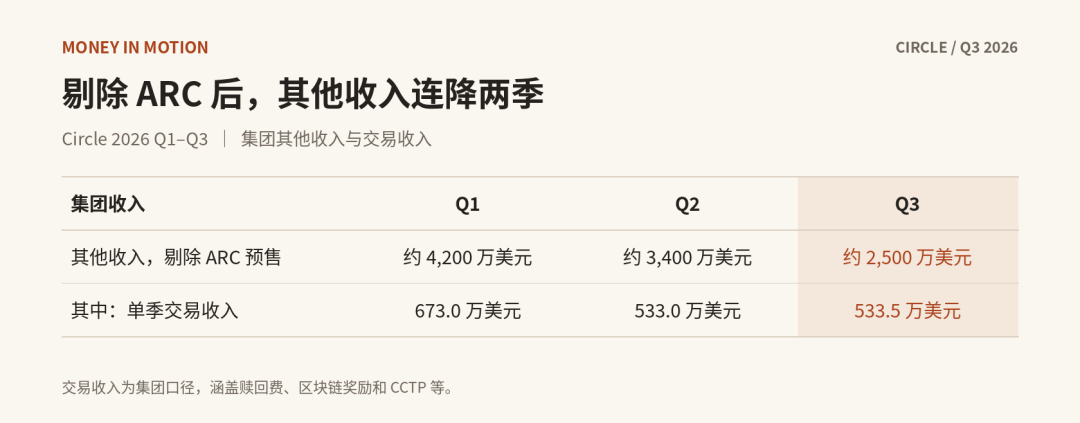
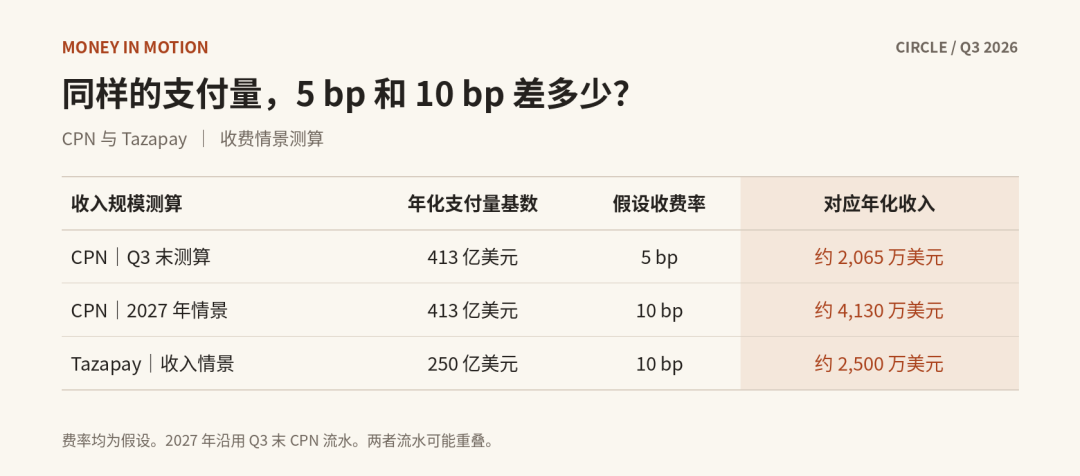
At a hypothetical 10-basis-point fee on CPN’s Q3 exit-rate volume, annualized revenue would be about $41.3 million. The actual result would depend on which transactions are chargeable, who charges for them and how fees are shared. Tazapay and CPN volumes overlap, so their figures cannot simply be added together.
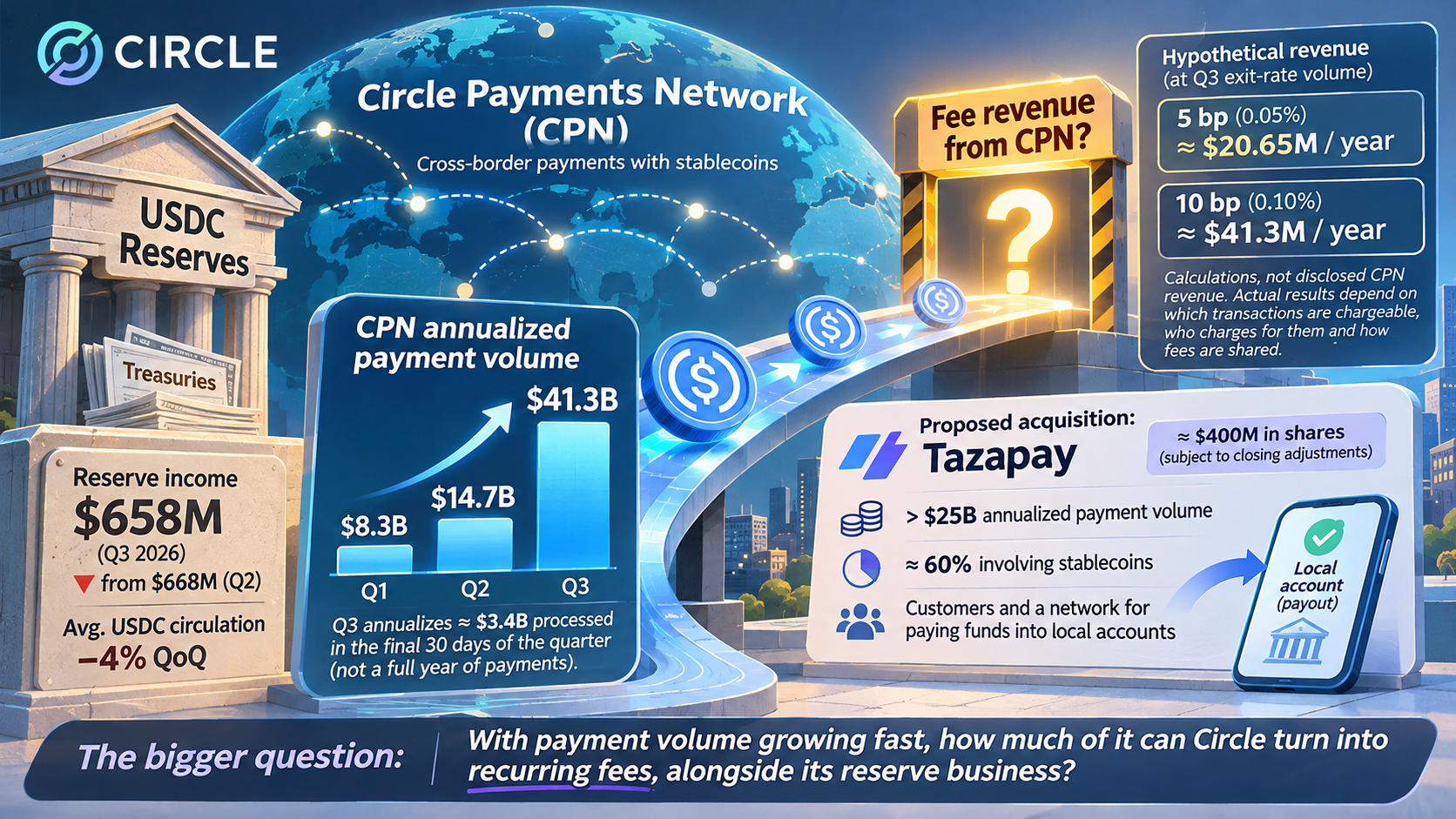
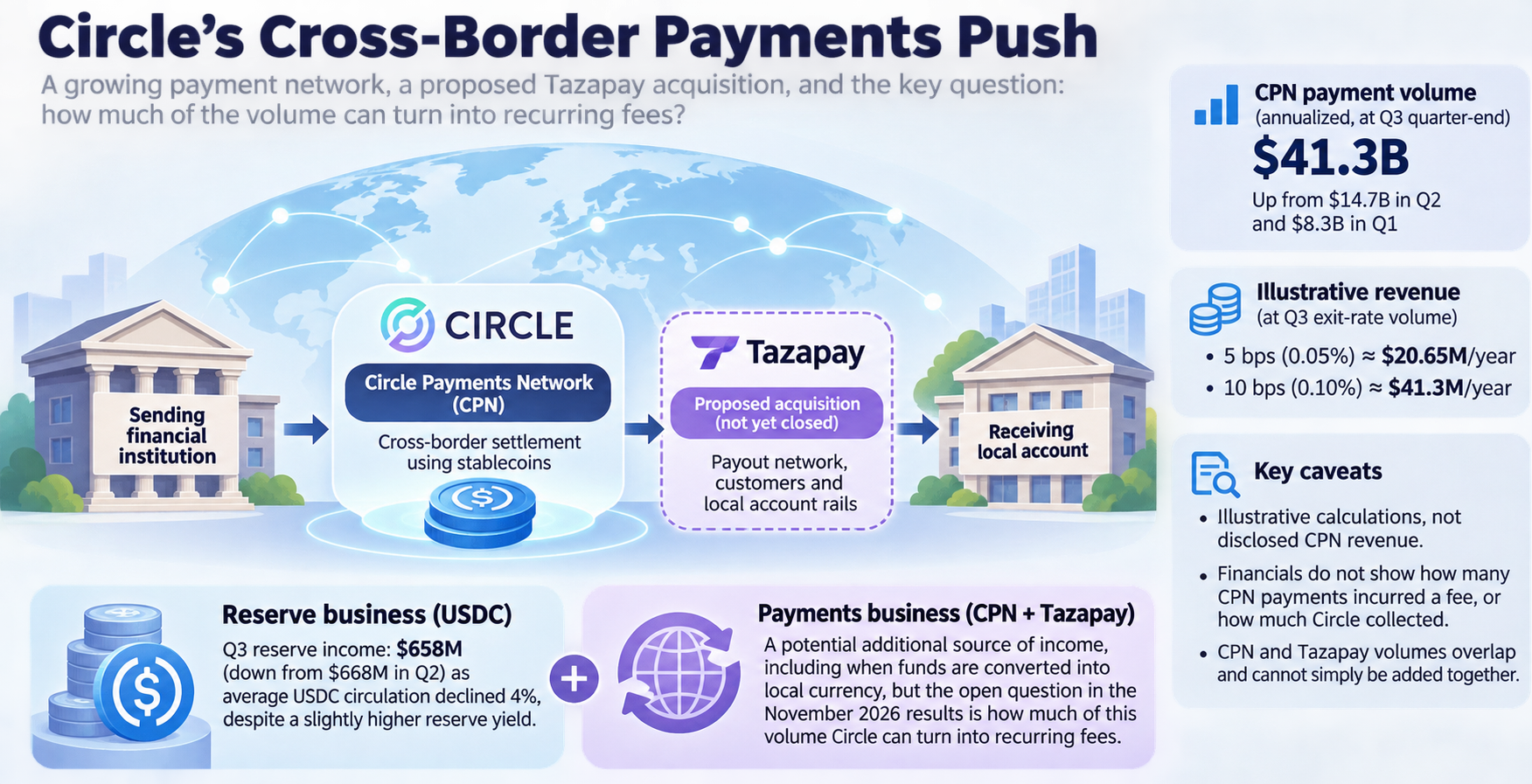
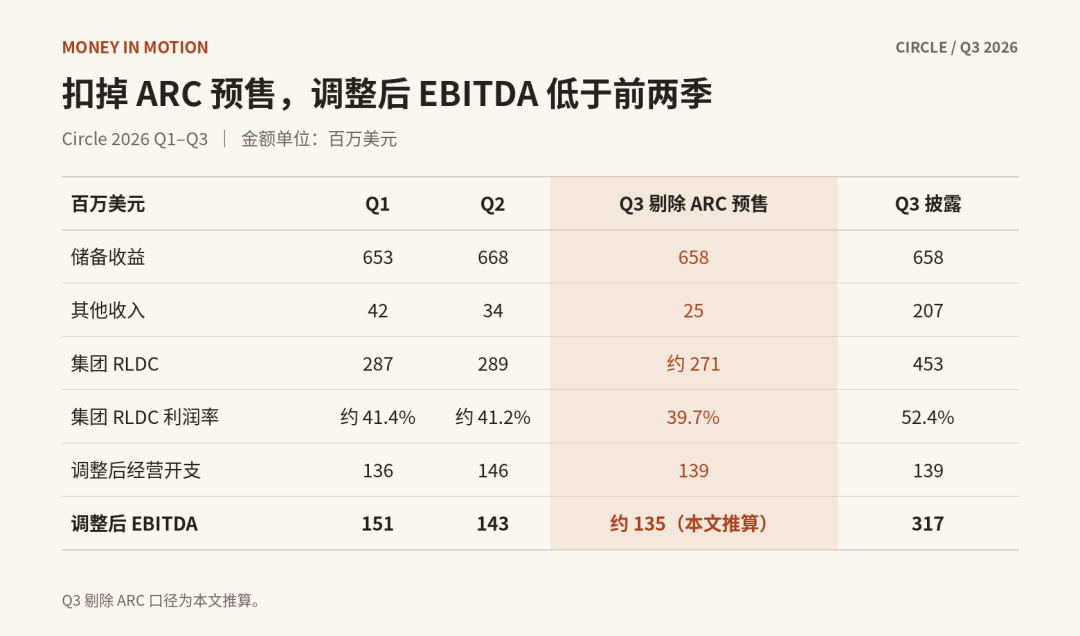
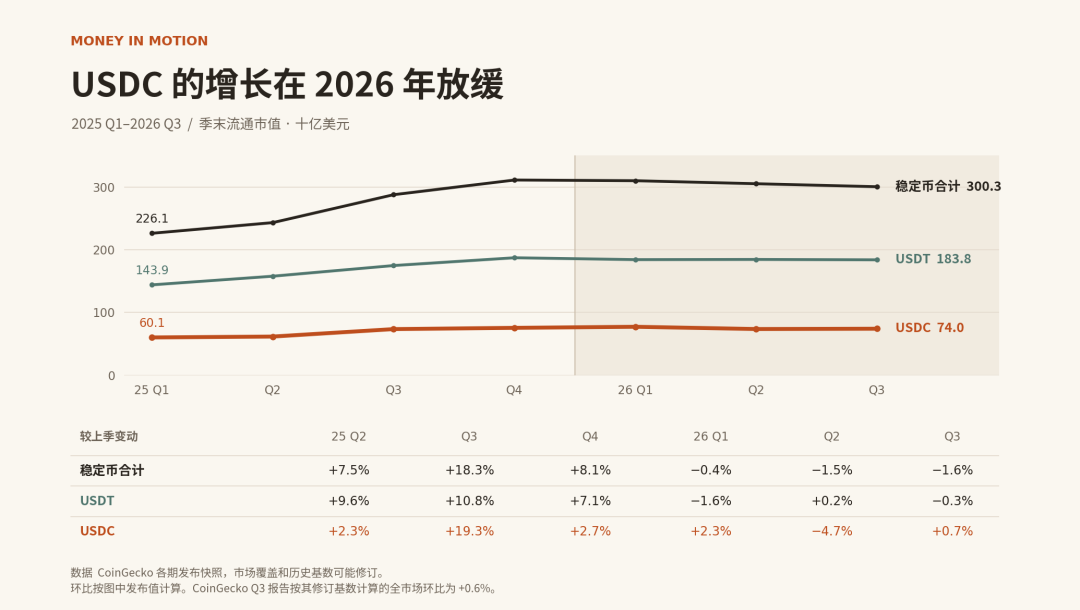
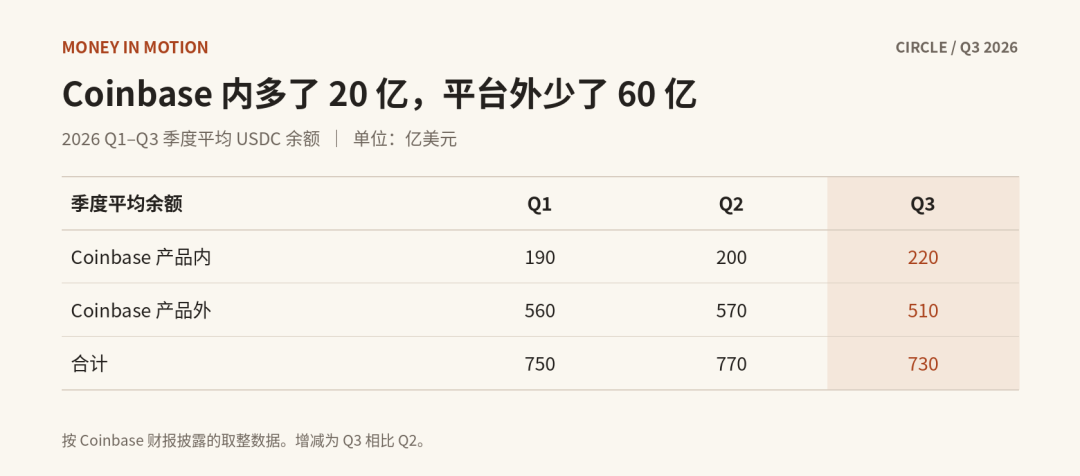
That distinction matters alongside Circle’s reserve business. Q3 reserve income fell to $658 million from $668 million in Q2 as average USDC circulation declined 4%, despite a slightly higher reserve yield. Payment volume may offer another source of income even when funds are converted into local currency rather than remaining in USDC. The outstanding question in the November 2026 results was how much of that volume Circle could turn into recurring fees.