
As reported on November 6, 2026, Russia had created legal channels for some cross-border cryptocurrency payments while retaining its ban on using crypto to pay for goods and services at home. The distinction matters for an importer: permission to send a digital asset does not, by itself, ensure that the supplier can receive, exchange or spend it.
Why Russia opened a cross-border route
Russia’s central bank proposed broad restrictions on cryptocurrency trading, exchange and mining in January 2022. The finance ministry argued instead for regulating activity that already existed. After Russia launched its full-scale military action against Ukraine in February 2022, restrictions on conventional banking channels sharpened the dispute over how businesses could settle foreign trade.
SWIFT disconnected seven designated Russian entities and related subsidiaries in March 2022 under EU rules. Russia made greater use of other currencies: central-bank figures put the yuan’s share of Russian export settlements at 13% in January 2023 and 35% that September. But a mutually acceptable currency did not guarantee an available bank. Reuters reported in April 2024, citing five people familiar with the matter, that some Chinese banks were avoiding Russia-related business over secondary-sanctions concerns; one interviewee described waits of two to three months to open an account at VTB’s Shanghai branch.
Legislation signed in August 2024 allowed importers and exporters to use cryptocurrency for foreign-trade settlement through a central-bank-organized pilot with limits on participants and duration. In December of that year, Finance Minister Anton Siluanov said Russian companies had begun making international payments with digital currencies, including Bitcoin mined in Russia.

What the 2026 framework changed
Russia’s Digital Currency and Digital Rights Law took effect in September 2026, providing a domestic regulatory channel for residents to trade crypto and a broader framework for cross-border use by importers and exporters. On October 6, the central bank announced that the first five digital custodians and four crypto exchange businesses had entered its registers. Those businesses have until September 2027 to bring their operations into line with the new law.
The rules do not make crypto a general-purpose domestic payment method. Purchases of goods and services within Russia remain prohibited. Access for ordinary, non-qualified investors is also conditional: the central bank’s description of the new regime requires a test and limits purchases through each intermediary to 300,000 rubles a year in highly liquid cryptocurrencies.
Mining has a separate regulatory track. Russia introduced a registration service for mining businesses in November 2024 and, from 2025, required reporting of mined assets and wallet-address identifiers to tax authorities. Registration can create records against which production and transactions can be checked; it does not guarantee that every coin or subsequent payment can be traced. Power constraints also remain: parts of southern Irkutsk region became subject to a mining ban in April 2025, scheduled to run through 2031.
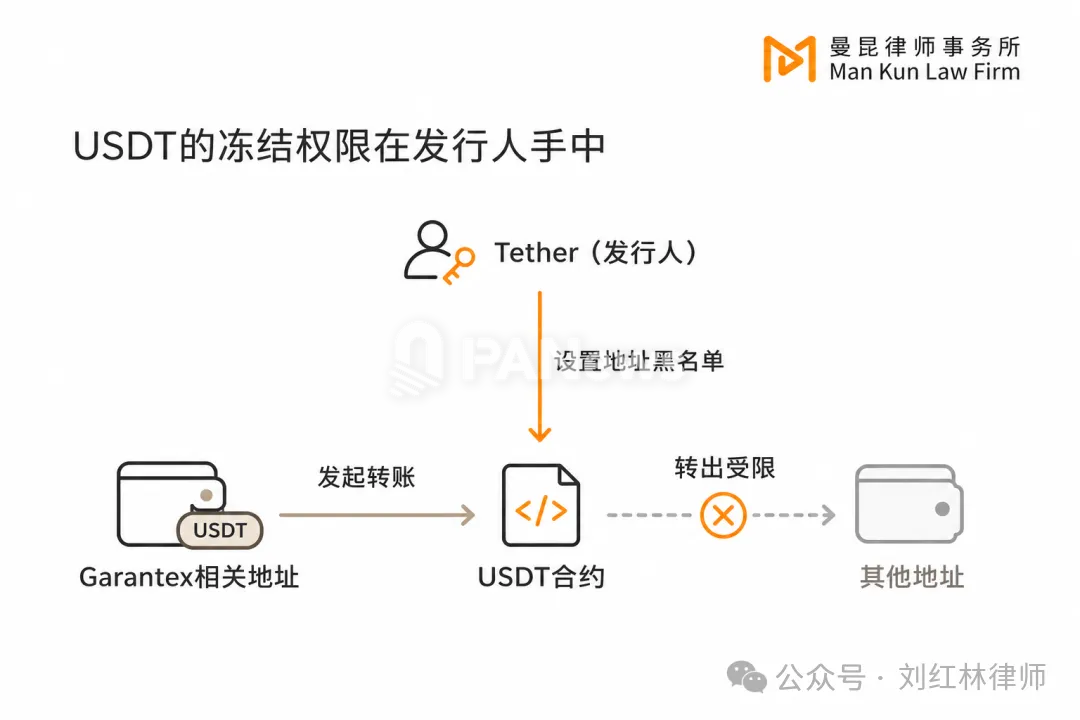
A transfer is not the same as usable funds
The Garantex case illustrates a separate settlement risk. Following joint enforcement action against the exchange in March 2025, Tether said it had helped the U.S. Secret Service freeze $23 million connected to Garantex transactions. A recipient holding USDT can therefore face restrictions imposed by the token’s issuer even after funds have moved on-chain.
According to a U.S. Treasury sanctions determination in August 2025, people associated with Garantex shifted customers and funds to Grinex and used the ruble-backed A7A5 token in that transition. The EU’s nineteenth Russia sanctions package, adopted in October 2025, prohibited transactions involving A7A5 within the EU. In October 2026, the United States designated the A7 network a sanctioned transnational criminal organization; a separate FinCEN transaction-restriction rule was still a proposal, not an enacted rule, at the time of the report.
For a business paying a foreign supplier, the practical question runs beyond whether it can send a token. The supplier must be willing and able to accept it, and there must be a workable route to exchange or redeem it for funds the supplier can use. Russia’s policy changes expanded regulated options for cross-border payment, but they did not remove those dependencies.