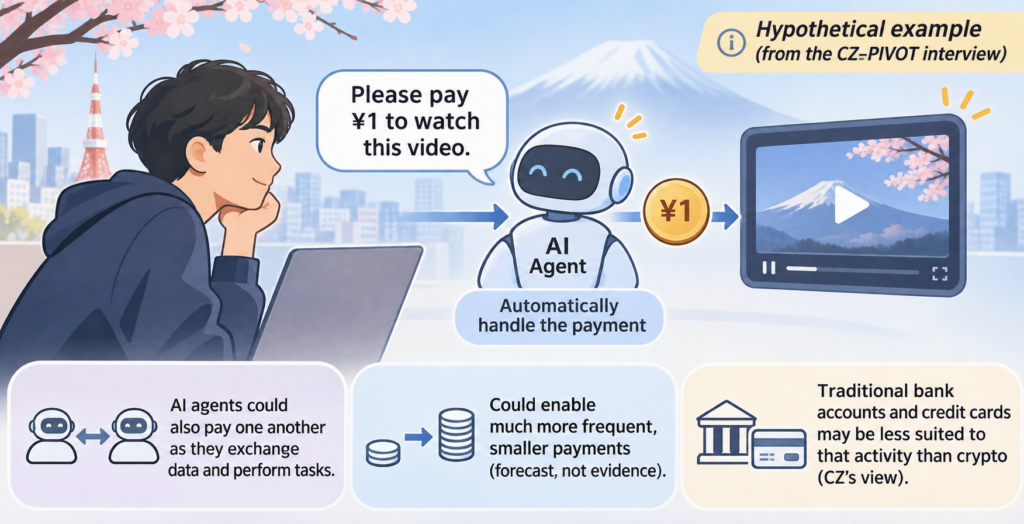
In an interview with Japanese business outlet PIVOT reported on November 21, 2026, Binance founder Changpeng Zhao (CZ) argued that AI agents could create demand for frequent, small payments. His example was a viewer paying one yen for a video rather than buying a full subscription, with an agent handling the payment automatically.
CZ said agents could also pay one another as they exchange data and perform tasks. He expects traditional bank accounts and credit cards may be less suited to that activity than crypto. These were forecasts, not evidence of an operating payment system: he suggested AI could increase transaction frequency by a thousandfold or even a millionfold, while reducing the amount of each payment.
The interview did not identify a particular blockchain, wallet or Lightning implementation for those payments. Nor did it establish what they would cost or how reliably they could be completed.
Japan’s stablecoin and tax questions
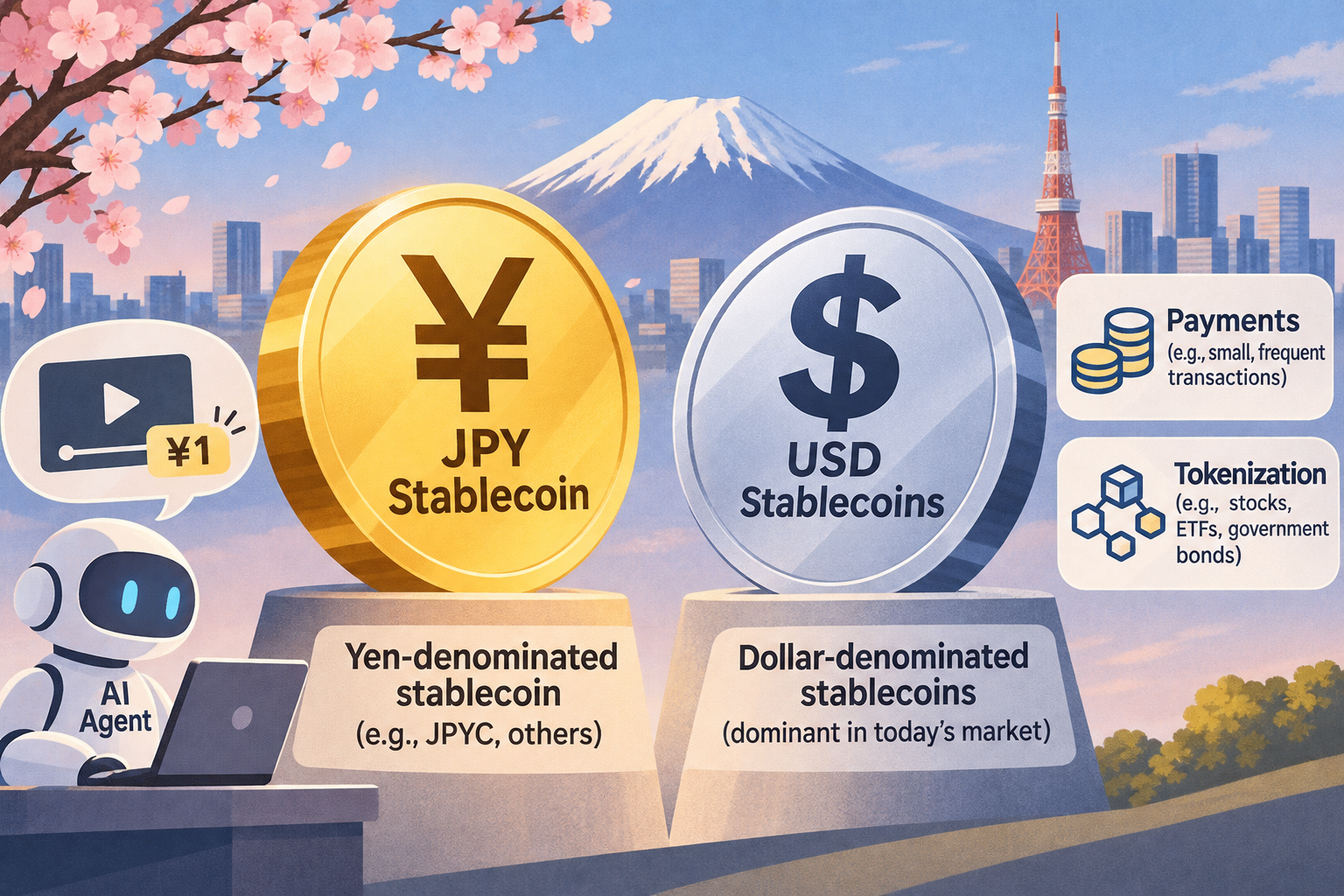
CZ also urged Japan to develop yen-denominated stablecoins more actively. Asked about JPYC and other yen stablecoins, he said the crypto market remains dominated by dollar-based stablecoins. He described stablecoins as a way to tokenize a national currency and also favored further tokenization of assets such as stocks, ETFs and government bonds.
PIVOT asked about a proposed Japanese crypto tax change that would lower the top rate from approximately 55% to around 20%. CZ said the lower rate could attract trading activity, but added that wider use of crypto for purchases might require Japan to consider how consumption tax and other transaction taxes apply. The interview did not present the proposed rate as an enacted rule.
CZ placed a roughly five-year horizon on significant changes from AI and blockchain, while acknowledging that regulation, legal systems and adoption by businesses and individuals could slow them. For payments, his central claim remains a possibility to test—not a demonstrated replacement for existing ways to pay.