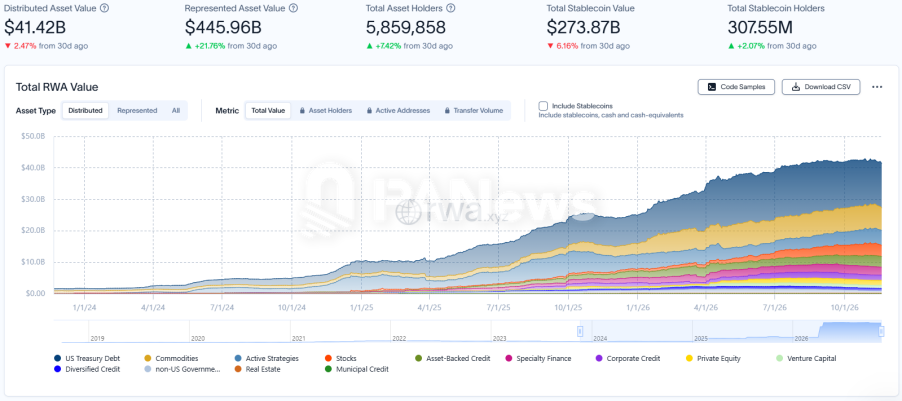
PANews’ November 20, 2026 roundup, covering November 13–20, described several efforts to move payments and settlement across banking and blockchain systems. Some were completed tests; others remained proposals or plans.
Cross-border settlement: tests, not general availability
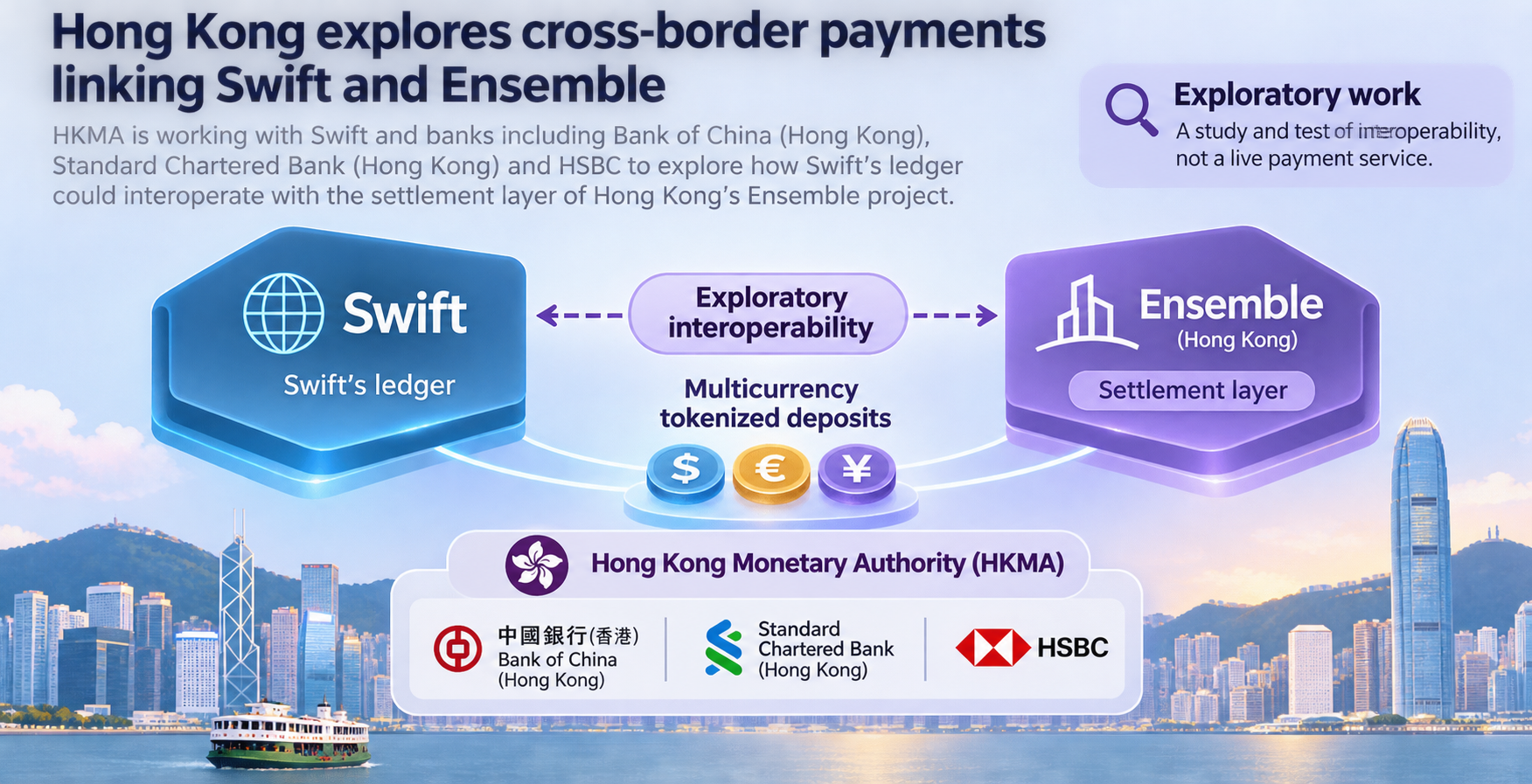
On November 16, the Hong Kong Monetary Authority said it was working with Swift and banks including Bank of China (Hong Kong), Standard Chartered Bank (Hong Kong) and HSBC to explore how Swift’s ledger could interoperate with the settlement layer of Hong Kong’s Ensemble project. The aim is to reduce barriers between international and local payments using multicurrency tokenized deposits. The roundup described this as exploratory work, not a live payment service.
DBS and JPMorgan’s Kinexys introduced an interoperability solution connecting DBS Token Services with the Kinexys blockchain deposit-account network. According to the roundup, institutional clients can transfer U.S. dollars between blockchain accounts in the United States and Singapore outside conventional banking hours, including weekends.
A separate proof of concept by StraitsX, OCBC and Standard Chartered tested payments between the banks’ tokenized-deposit systems. It covered initiation, compliance screening, liquidity checks, settlement and confirmation. In a controlled test, the participants completed a U.S.-dollar payment flow outside standard banking hours in minutes and reduced the need for bilateral prefunding. They said legal, regulatory, operational and commercial arrangements still need assessment before further development or commercial deployment.
Stablecoins at the payment endpoint
The World Bank Group said it would work with Citi and Circle to explore whether regulated dollar stablecoins and blockchain payment channels could complement or improve its correspondent-bank-based disbursements. Citi would connect existing banking channels, while Circle would handle USDC minting and settlement. The work builds on the World Bank’s FundsChain platform, which the roundup said was used by more than 350 projects in 96 countries. It is an exploration, not a reported rollout of USDC disbursements.
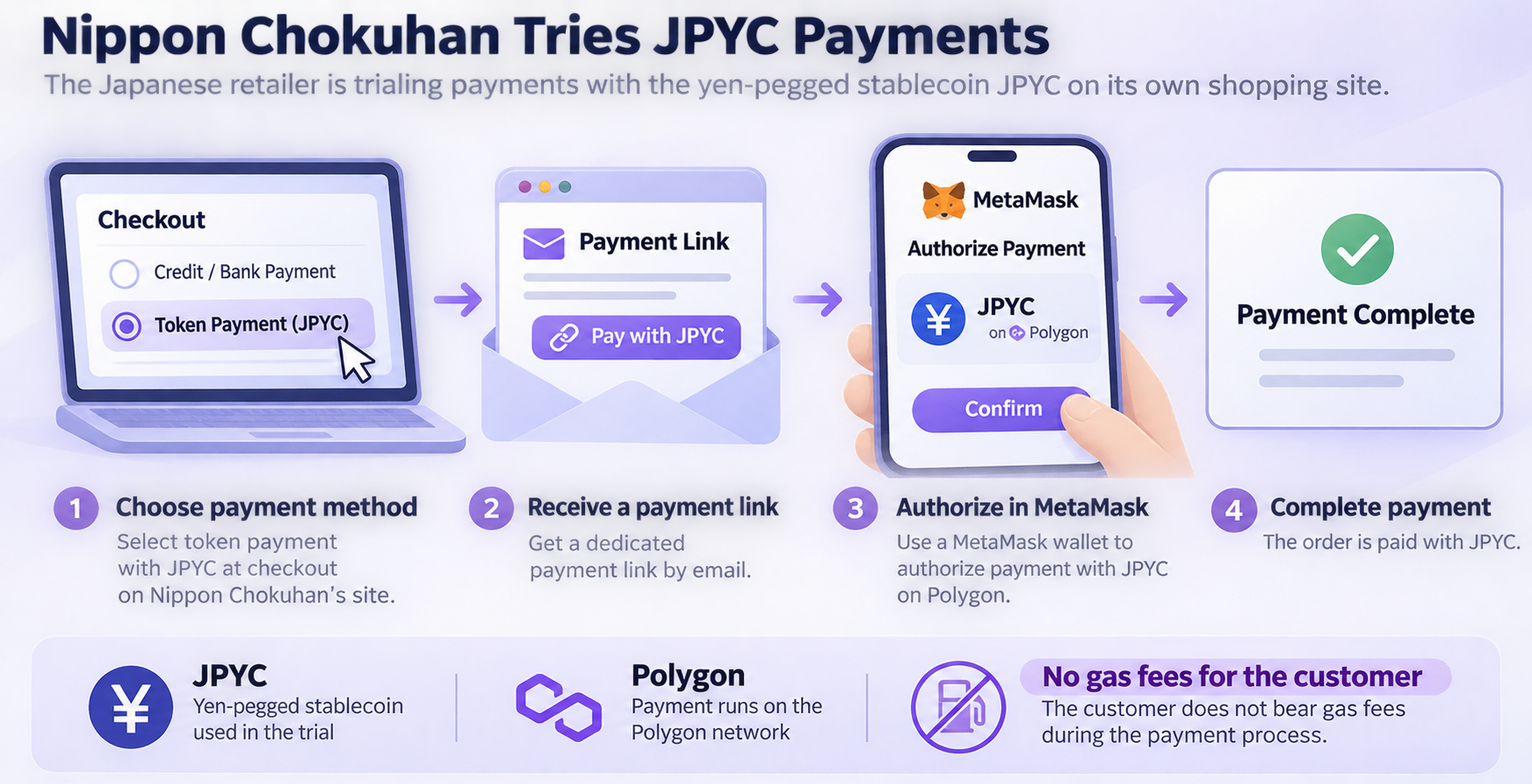
Japanese retailer Nippon Chokuhan was trialing JPYC payments on its own shopping site. A customer choosing token payment at checkout receives a payment link by email and authorizes payment from a MetaMask wallet using JPYC on Polygon. The roundup said the customer does not bear gas fees during the payment process; it did not say who does.
In another retail use case, HSBC said customers could use RedCoin to subscribe to a tokenized Hong Kong-dollar fund share class from November 19. The stated minimum was 100 RedCoin, equivalent to HK$100. This is a fund subscription, not a merchant-payment launch.
Rules and usage indicators
A South Korean Digital Asset Basic Act draft expected to be released later in November was reported to propose bank-led consortia as issuers of won stablecoins. Exchanges and payment platforms could still compete to connect consumers and merchants. A financial regulator official said stablecoin electronic payments might fall under the Electronic Financial Transactions Act, with obligations concerning customer funds, transaction records and disputes. These were prospective arrangements, not enacted rules.
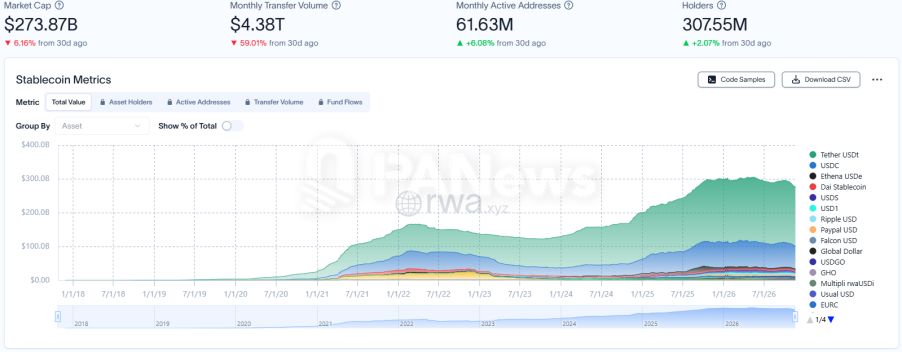
RWA.xyz figures cited in the roundup put stablecoin market capitalization at $273.87 billion as of November 20, down 6.16% from the same point a month earlier. Monthly transfer volume was $4.38 trillion, down 59.01%, while monthly active addresses rose 6.08% to 61.63 million and holders rose 2.07% to 308 million. Those measures show different movements in transfer value and participation; they do not, by themselves, establish how much activity was for purchases or remittances.