In an account published on November 21, 2026, wallet provider imToken said it would remain cautious about bringing EIP-7702 broadly into its product, stop new product-development investment in ERC-4337, and gradually shift its research focus toward native account abstraction on Ethereum. It framed the decision as a trade-off between more flexible wallet features and the security and maintenance demands behind them—not as a claim that account abstraction is ready to replace existing wallets.
What changes for a wallet user?
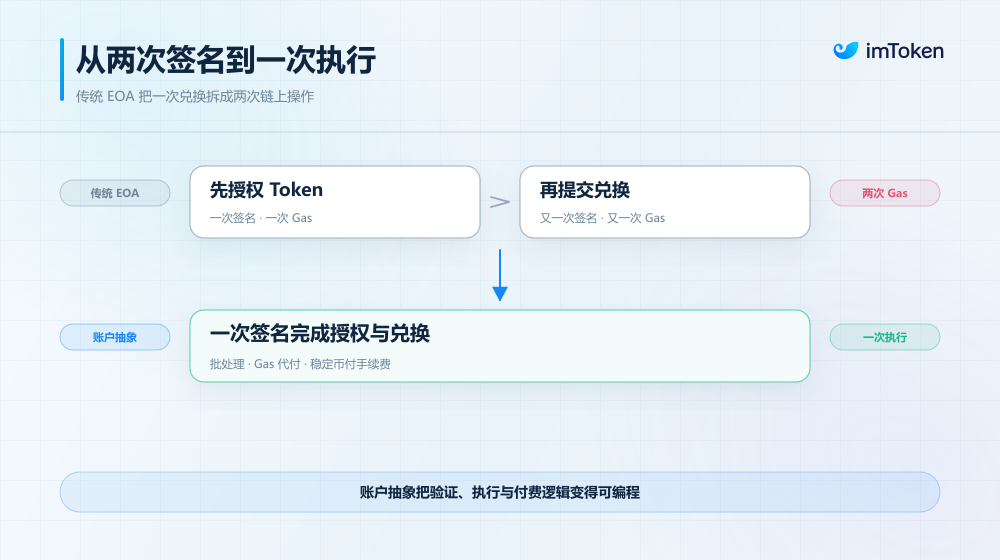
A conventional externally owned account (EOA) is controlled by a private key. That model makes the basic control relationship relatively clear, but it limits what the account itself can do. imToken gives the example of a token swap that may require a separate ERC-20 approval and swap transaction, with two signatures and two gas payments. Programmable accounts can support features such as batching operations, alternative fee-payment arrangements and more flexible permissions.
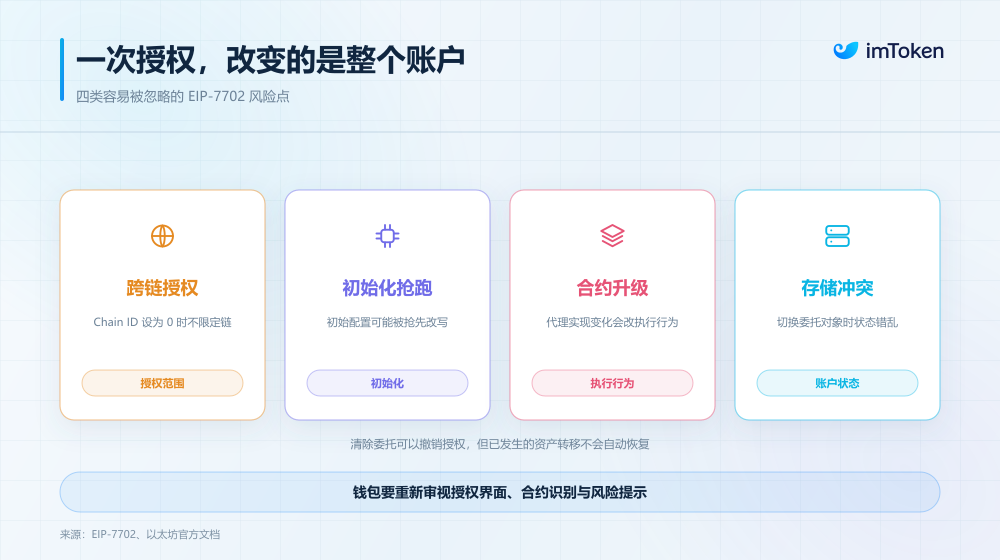
Those features also change what a user may be asked to authorize. A single confirmation could affect not just one transaction but the account’s execution rules or the permissions granted to other parties, imToken cautioned.
Different designs, different risks
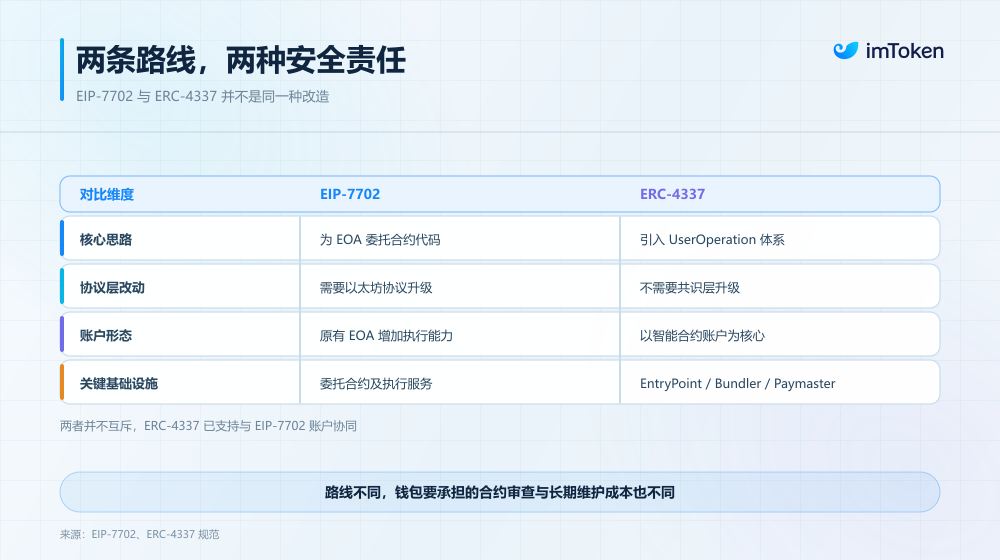
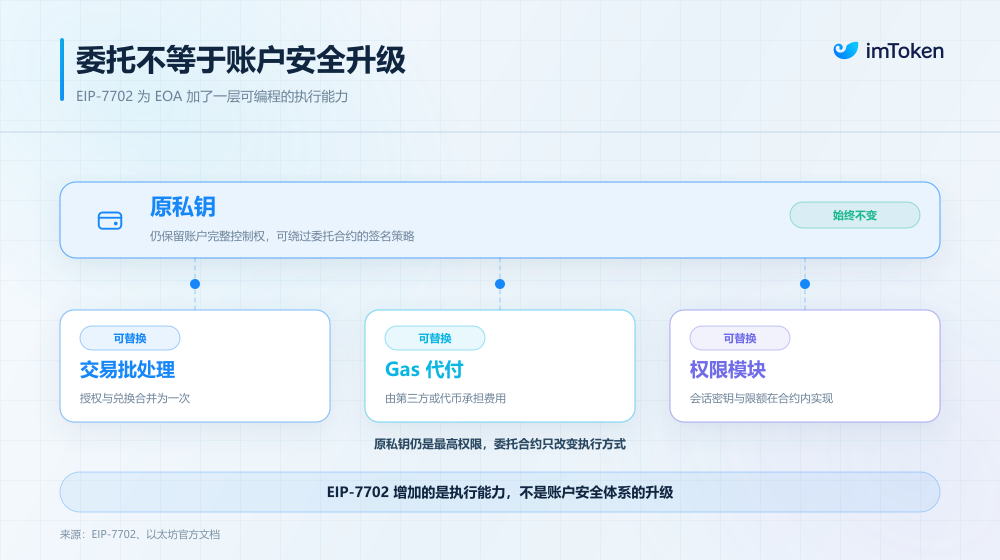
With EIP-7702, an EOA can authorize delegation to deployed contract code. imToken said this can enable features such as batched transactions and sponsored gas, but delegation to malicious or seriously flawed code could put assets across the account at risk if that code has broad transfer or contract-call powers. The original private key still controls the EOA and can bypass some policies in delegated code. Revoking a delegation also cannot undo transfers or other on-chain changes that have already occurred. EIP-7702 is on Ethereum mainnet, but imToken said it is not yet ready to introduce it broadly to ordinary users.
ERC-4337 takes a different route through smart accounts and supporting infrastructure. A wallet creates and signs a UserOperation; a bundler checks it through EntryPoint simulation, then submits accepted operations for on-chain validation and execution. A paymaster may participate when fees are sponsored, while account creation may require a factory contract. imToken said these components bring compatibility, reliability and ongoing security-review costs. The two approaches are not mutually exclusive: ERC-4337 has added support for EIP-7702 compatibility.
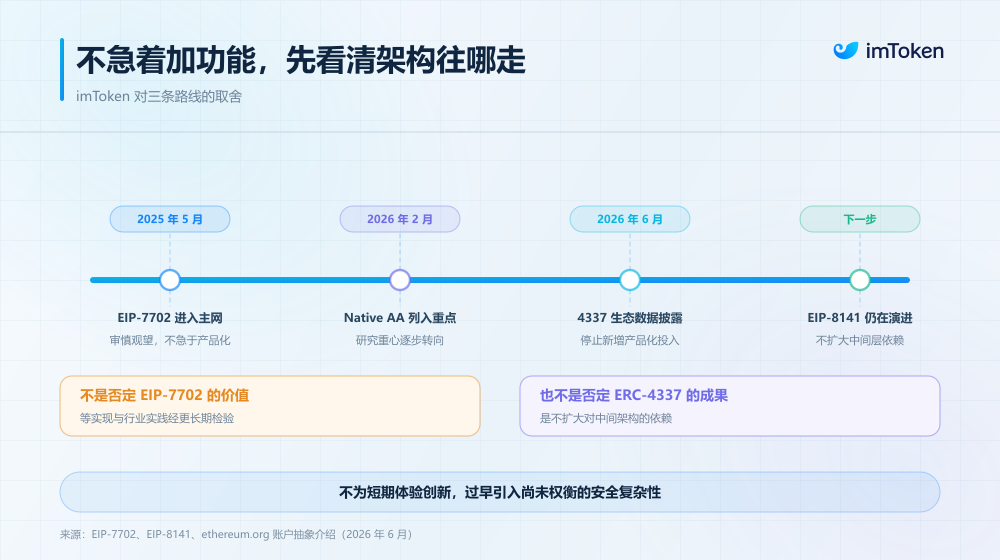
imToken said ERC-4337 has demonstrated that smart accounts are workable, but it no longer plans additional product-development investment in that architecture. It instead intends to study native account abstraction, while acknowledging that account code and new validation and fee-payment mechanisms would still require auditing and testing.
The Ethereum Foundation identified native account abstraction as a core user-experience priority in February 2026, according to imToken. One possible route, EIP-8141’s Frame Transactions, would separate transaction validation, fee authorization and execution into stages. It remained a draft at the time of imToken’s account, not a deployed replacement for today’s wallet arrangements.